ZAHED KAMATHIAVP, Chief Talent & Development Officer, LEGO® Group The LEGO® Group pioneered having a company purpose. Was it worth the investment, and what did they learn? |
LISTEN ON
|



ZAHED KAMATHIAVP, Chief Talent & Development Officer, LEGO® Group The LEGO® Group pioneered having a company purpose. Was it worth the investment, and what did they learn? |
||
|
27 min
|
LISTEN ON
|
|
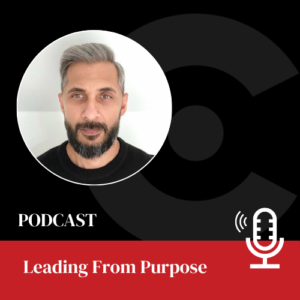
Zahed Kamathia, LEGO® Group: How personal purpose connects to company purpose
The LEGO® Group pioneered having a company purpose. Was it worth the investment, and what did they learn?
Zahed Kamathia
VP, Chief Talent & Development Officer, LEGO® Group
Episode published 2022 · 27 min
SUMMARY
Zahed Kamathia contributed to rethinking what leadership means at the LEGO® Group. He did his own purpose work with Nick Craig around 2018. In this episode of the Leading from Purpose podcast, the two discuss how his purpose, “to go where there are no roads and leave a trail for others to follow,” shaped that work. They also cover how the company connects its people to its own purpose, from hiring to development.
GUEST
Zahed Kamathia is VP, Chief Talent & Development Officer at the LEGO® Group.
HOST
Nick Craig is President & Founder of Core Leadership Institute, author of Leading from Purpose (Hachette Books, 2018) and co-author with Scott Snook of the Harvard Business Review article “From Purpose to Impact” (2014).
Key takeaways
Purpose is a place to return to, not a state to hold.
Zahed uses his purpose as a check when his energy drops, asking whether a conversation holds something new to discover.
Letting go of a predicted outcome made the leadership model distinctive.
Halfway through the design workshop, Zahed told the facilitators he did not know where the work would land and accepted that. He sees that moment as one of the key differentiators in the result.
A company purpose is easier to write than to connect to.
Zahed argues the effort lies in linking employees to it through who is hired, how they are interviewed, and how they develop.
One or two words carry the connection.
Nick observes that people connect to a company purpose through the words that echo their own. For Zahed, those words are “inspire” and “tomorrow.”
A famous consumer brand helps hiring and can also mislead candidates.
Candidates often arrive with an image formed by the brand. Zahed describes a competitive business that must win a new generation of customers every year as children grow up.
CHAPTERS
00:00What is it like inside a LEGO® Group office?
01:49What is Zahed Kamathia’s purpose?
03:30How do you use your purpose day to day?
05:55How was leadership redefined at the LEGO® Group?
10:48What does a purpose about ambiguity look like in practice?
12:21Is the LEGO® Group a purpose-driven company?
14:19How does personal purpose connect to company purpose?
16:48How does purpose shape hiring and development?
20:36What is it like to work in the toy business?
Transcript
Lightly edited for readability.
00:00
What is it like inside a LEGO® Group office?
Nick Craig00:03
Hi, my name is Nick Craig, and this is the Leading from Purpose podcast. Today our special guest is Zahed Kamathia, and he is the head of talent and development at the LEGO® Group. I’ve had the privilege of working with him for a number of years, and I’m excited because today we get to have a conversation in two parts. One part is about his journey with his purpose, and the second part is about the bigger adventure of the LEGO® Group with purpose and how it’s been playing out. So thank you so much for joining me today.
Zahed Kamathia00:37
Thank you for having me.
Nick Craig00:38
And where are you today, by the way?
Zahed Kamathia00:40
I am in our London City offices today. We are practicing hybrid working, so a lot of colleagues are now back in the office, and there’s a great buzz today. So it’s great to be here.
Nick Craig00:55
I’ve been in that office, and there are LEGO® models all over the place.
Zahed Kamathia00:58
Yes, there are. As you would expect from the offices of the LEGO® Group, you’d expect to see lots of primary colors, lots of big LEGO® models, lots of very energized and very curious people. And we don’t disappoint.
Nick Craig01:12
When I was there last time, there were people wearing costumes. It wasn’t Halloween, but they were wearing Star Trek and Star Wars costumes and walking around the office. I can’t remember what day it was, but it looked like a great way to get to work.
Zahed Kamathia01:29
Oh, cool. I may have missed that day. Pre-pandemic, there was usually a fancy dress competition at Halloween. But beyond that, we’re pretty casual here. So if folks want to come in dressed as Darth Vader or whomever, it’s okay by us.
01:49
What is Zahed Kamathia’s purpose?
Nick Craig01:49
I would love to have you share with us your purpose.
Zahed Kamathia01:52
Sure. My purpose is to go where there are no roads and leave a trail for others to follow.
Nick Craig02:00
What does that mean for you?
Zahed Kamathia02:02
Good question. I worked on my purpose a number of years ago now, probably 2018, maybe even before that. So it’s been a few years that I’ve been working with it, evolving it, and understanding it.
It references two things. The first part, to go where there are no roads, is all about my curiosity. I have an innate desire to see beyond the next horizon, to see around corners. That’s what I’m energized by and motivated by. Before discovering my purpose, I brought that unconsciously into my everyday work, both at home and at work. Since discovering it, I’ve been in it and owning it a little bit more.
The second part, leaving a trail for others to follow, is the desire that once I discover what opportunity may lie ahead of us, I want others to follow. I want others to experience the same joy I’ve found in arriving wherever it is I’ve arrived.
The first part of the phrase is also inspired by one of my favorite movies growing up, Back to the Future. If you’re a film buff, you’ll know that phrase, to go where there are no roads, comes directly out of that film.
Nick Craig03:22
So say the whole purpose again.
Zahed Kamathia03:24
To go where there are no roads, leaving a trail for others to follow.
03:30
How do you use your purpose day to day?
Nick Craig03:30
Beautiful. It’s been four or five years since we did that work together. Can you give an example of where you’ve really lived your purpose?
Zahed Kamathia03:46
Your purpose shows up throughout your life. I’ve only realized that since putting words to my purpose. Let’s call it that. It’s less of a discovery and more a structured opportunity to put words to something your conscious self has always been aware of.
Having found it and looked back across my career and my life, you start to unpack the moments where your purpose really showed up. For me, it’s the moments where I’ve been stretched or had a real high-growth opportunity. Whether it was starting a new job, choosing to leave a job, or taking on another opportunity, it was always propelled by this sense of wanting to go where there are no roads.
Since 2018, I’ve been working with it more consciously and deliberately. Two things are important for me. One, owning it. I don’t believe I’m in my purpose all of the time.
That would be exhausting. There’d be an adrenaline overload, and I couldn’t cope. But going to it, and recognizing that you need it intermittently throughout your month, your week, your day, your year, is important to be energized again.
That’s one of the ways I’ve been consciously using it. When I feel I’m in an energy slump, I try to ask: am I living my purpose? And if not, do I have an opportunity to live it? To put it practically, is there a road I haven’t been down before? Is there a discovery I can make? Could I be more curious going into this conversation or this meeting?
It doesn’t have to be grandiose. It can simply be a decision before a meeting to say, could I be more curious here? Is there something I don’t know that would be interesting to learn more about? Those are some of the ways I’ve been making it practical.
05:55
How was leadership redefined at the LEGO® Group?
Nick Craig05:55
When I first met you, you were Chief Learning Officer for the LEGO® Group. You told me a story about creating the current LEGO® Group leadership model. It was a beautiful example of you living your purpose. Would you be willing to share it again?
Zahed Kamathia06:12
When I joined our People Operations and Development team, what others would call the HR organization, back in 2017, two things stood out. One, I walked into a function where I had no prior experience. My experience was outside HR, in different business functions. This was the first time I was coming into a people-oriented function.
The first task I had was to reinvent how we lead. What does leadership mean at the LEGO® Group? That’s a big and ambiguous task for anyone, especially someone without the HR experience people would normally need for that position. But for me, it was perfect. It was before I discovered my purpose, but intuitively, with every pore in my body, I knew this was one of those tasks I would enjoy.
Without going into the nuts and bolts, because I didn’t have past experience developing leadership models or frameworks, and because I’m a curious individual motivated by my purpose, I was able to bring a fresh approach to how an organization could understand the type of leadership it might need for the future.
We have since written about that approach, created a case study, and shared it with other organizations. I now recognize it as unique. It’s not how organizations would conventionally approach leadership framework design. But it enabled us to achieve a truly distinctive expression of how we want people to lead at the LEGO® Group, which would have been difficult to create any other way.
Nick Craig08:06
One of the things I say to everyone when I talk about purpose, whether or not you know your purpose, is: what are the one or two things only you can do? If we put somebody else in your role, they would do a lot of the same things. But what would you do that no one else would? When you created the Leadership Playground, I think how you went about creating it and deciding what should be in it was your unique contribution. I’d like you to share more specifically what you brought that wouldn’t have happened if somebody else had been in the room.
Zahed Kamathia08:44
It’s an interesting question. You could break the task into its subatomic parts: a planning phase, a design phase, an execution phase. But there was one moment that I think was unique to me.
We had set out the ambition and kicked off the project. Our CEO, who was new at the time, Niels [Niels B. Christiansen], and Loren [Loren Shuster, former Chief People Officer] presented to the working group and set the tone. We had a workshop with the working group and our facilitating partners. About a day and a half into it, the facilitators asked me whether this was likely to go in the direction I wanted. I sat down and said, “Honestly, I have no clue where this is heading. Based on the three days we’re working together, I have no clue whether this will result in the outcome we’re expecting.”
And I said, “I’m okay with that.” That took a lot, because my background is in managing large-scale transformations and projects. It’s a fairly structured way of working, based on predicting the outcome. That’s how most people work. In this moment, I had to say I’m okay with not knowing the outcome. It could have been orange or blue, left or right, an elephant or a giraffe. Anything could have come out of that conversation.
That letting go, that real moment where you say this is a road where I don’t know where it will lead, was looking back one of the key differentiators for why we ended up with something unique. If I had been more constrained, if I had been anxious about it, if I had tried to curtail the innovation, I think we would have ended up with something different.
10:48
What does a purpose about ambiguity look like in practice?
Nick Craig10:48
Say your purpose statement one more time for us.
Zahed Kamathia10:51
To go where there are no roads and leave a trail for others to follow.
Nick Craig10:55
What’s interesting about that purpose is that it’s about living in ambiguity. For those listening, different purposes have very different characteristics. Some people’s purpose is about being calm in chaos, and they need the house burning down to show up. Other people see their job as being the rear guard that makes sure everybody’s okay, and you do not want to put them in the chaos in the same way, because they’re about making it stable. Everybody’s purpose has a huge impact on how they show up.
When we look at yours, that was the perfect example of you living your purpose. It was about being okay with not knowing, and also putting something in place that others would follow. Fundamentally, you came up with the Leadership Playground, a model for leadership at the LEGO® Group.
I want to shift our conversation slightly. We’ve been talking about you and your impact at the LEGO® Group. It’s just as important for others to understand the role purpose plays for the LEGO® Group as an organization, and the connection between your purpose and the company’s purpose.
12:21
Is the LEGO® Group a purpose-driven company?
Zahed Kamathia12:21
Nick, one of the things I’ve said to you before is that I believe the LEGO® Group is one of the original purpose-driven organizations. There are a lot of new kids on the block. Purpose is very much of the moment. People see it as a real differentiator to create culture and harness the togetherness of employees toward a common direction.
When I joined the LEGO® Group nearly seven years ago, I didn’t necessarily understand purpose with a capital P. But it was super clear that this organization had meaning and purpose, an intention for why you’d want to join, and it was broader than what you yourself want from the job. You could become part of a whole.
Our overall mission, or you could call it our purpose, is to inspire the builders of tomorrow. It’s simple in nature, but you can break it down into many different parts. And that notion of purpose attracts the type of colleague we want in our organization. We do publicize our mission, our values, and our overall purpose. But the purpose almost hangs on its own. It appeals to the right individual.
It’s very difficult sometimes to put a finger on it. In my role as head of talent, I speak to candidates in interviews regularly. Without prompting, when you ask them about their motivation, nine out of ten talk about the mission, the purpose.
Nick Craig14:10
And the mission and purpose of the LEGO® Group, for you, is?
Zahed Kamathia14:12
To inspire the builders of tomorrow.
Nick Craig14:15
And do you feel the organization does a pretty good job of living there?
Zahed Kamathia14:18
I do, yeah.
14:19
How does personal purpose connect to company purpose?
Nick Craig14:19
How does that connect to your purpose?
Zahed Kamathia14:22
There’s an obvious phrase in there around tomorrow. Yes, there’s a piece about the present, and there are a number of colleagues in that space. Like you said, different purposes, different people. My purpose of going where there are no roads allows me to relate to what tomorrow looks like. Who is the next group of builders we want to inspire? Where are they? How would we reach them? That’s something I’m truly motivated by. And the part about inspiring also appeals to me a lot and relates to my purpose as well.
Nick Craig15:01
I think this is one of the most powerful links for any of us: how do we connect our own individual purpose to the purpose of the company we work for? In my experience, any company purpose statement is a set of words, and the question is whether they have any meaning. For each of us, there are usually one or two key words that carry much deeper meaning because of who we are and what our purpose is.
I’ve worked with people who don’t know their own purpose as a set of words. But when they look at the company purpose, one or two words really speak to them, and that starts to give me a sense of who they are. When we look at your purpose and the LEGO® Group’s, you can see that deep connection.
Who would you want as head of talent and development for the LEGO® Group? Someone with your purpose, because it’s about what you’re creating, the legacy of who holds the key roles and how that plays out over time. It’s a powerful example of how these pieces fit together, and you’re living it.
Over the last couple of years, I’m sure the LEGO® Group has faced the same challenges as everybody else: hiring people, keeping people, retention. Can you give an example of how you’ve thought about it differently, from the place of purpose? In talent development, the goal is to hire good people, keep the good people, and have nobody leave that you don’t want to leave. We know it doesn’t work that way.
16:48
How does purpose shape hiring and development?
Zahed Kamathia16:48
It’s a little more nuanced and complicated than that. But there are a couple of things we can all do. We were lucky enough to have a company purpose before it was all the rage. That said, I don’t think creating a company purpose is the most difficult thing for organizations. The more challenging part is creating the connection between employees and the company purpose. That’s where it requires effort and investment, in who we attract and how we attract them.
We’ve done a lot of work to show aspects of our purpose not just in words but in practice. Employees talk about who they are, why they work for the LEGO® Group, and how they relate to the company’s purpose, in employer branding videos and other material.
In the way we interview, we provide a lot of training for our hiring managers in interview and question guidance. A lot of it is around culture, and purpose comes into culture too. We want to understand what prospective candidates are driven by and what attracted them to the organization. I’ve yet to be on an interview panel where colleagues aren’t talking about why they were motivated to join the LEGO® Group, or why they’re still there.
And it comes back down to purpose. When it comes to development, we’ve put a lot of effort over the last four years into providing purpose training for colleagues across the organization. Every colleague across the world is given the opportunity to discover, identify, or put words to their purpose, and it has been a successful journey.
The feedback is positive. It’s energizing and uplifting, and it is an experience. It’s not a training by any stretch of the imagination. More than the feedback, it’s the stories we hear back, and they are truly individual. It’s very hard to predict that Nick or Zahed will have a similar experience. We will have very different experiences, that’s guaranteed. But the common outcome is that both of us will have an enlightening experience, with a lot to reflect on and a lot to bring back into how we choose to show up in our organization.
All of those things are making a difference in how we make purpose, which in its purest form is quite an ambiguous topic, more accessible, and how we use it to create the culture we want at the LEGO® Group.
Nick Craig19:41
From my perspective, the LEGO® Group has been very purposeful for many years. When we showed up in 2016–17, after the company had laid off a lot of people and things were a little dark, one of the reasons you and your boss, the head of HR, decided to bring purpose to individuals was to remind them why they work at the LEGO® Group when it was tough. To help the HR group, and then everyone else, remember what it means to live from purpose. The challenge with purpose, as you said, is that it’s a question you need to ask every day, not something you do once and stop.
Zahed Kamathia20:35
Correct.
20:36
What is it like to work in the toy business?
Nick Craig20:36
In some ways, my experience of the LEGO® Group is that the toy business is tough, even though the external world sees it as an amazing place where it must be so much fun to work. We talked at the beginning about how wonderful the office is. But my experience with you and others is that the toy business is a very small world, and a really tough business to be in. I’d love you to talk for a minute about the realities of working in a company that happens to make toys.
Zahed Kamathia21:11
One of the anecdotes I share with anyone I’m looking to hire is a reminder, because they’re super excited. We’re very lucky. We have a very strong consumer brand. But a strong consumer brand also creates an impression for prospective employees. People come into an interview with an idea of what this organization is like. Very rarely do we interview someone who has never heard of us and had to Google us for the first time. That just doesn’t happen.
Nick Craig21:42
I would love you to find that person.
Zahed Kamathia21:44
I’m still looking for that person. “Have you heard of us?” “Nope, never.” “Great.” It hasn’t happened.
That’s both a blessing and a curse. If you have a strong perception of the brand built from your consumer experience, that’s what you’re expecting. I often have to tell candidates that it’s not quite Willy Wonka’s chocolate factory when you walk through the doors. There are processes, teams, structures, and policies. In many respects it’s a regular business, driven by performance needs, growth demands, and high ambitions. It wants to do things excellently, go into new markets, and reach new customer segments.
Couple that with the realities of the toy market you talked about, which is highly competitive and demands regular innovation. One fact that always tickles me is that we have to re-recruit our consumer base every year, because children grow up. We have a strong line for adults now, but our core audience of boys and girls sometimes reaches an age where they fall out of love with LEGO® [products]. We do a lot to keep them entertained with different types of products, but we have to re-recruit. That demands a lot of innovation.
The other aspect is that the toy market is constantly evolving. There are all manner of pressures from the digital world, the virtual world, the metaverse, Web 3.0, pushing us in directions where we don’t know whether there is a road, let alone where it goes. That’s a very interesting space to be in as a business.
23:39
What is the LEGO® Group campus in Billund like?
Nick Craig23:39
I wanted to give everybody a sense of how complicated that is, because it’s easy to see it as everything being wonderful. As the final thing we share, could you describe the experience of staying at the corporate headquarters? It is the coolest place I’ve ever been in my life.
Zahed Kamathia24:02
We’re super lucky to have a campus headquarters in Billund, Denmark, the home of the LEGO® Group. It’s a brand-new facility, launched a couple of years ago. It’s very hard to put words to it. It’s an experience to be had. It is everything you imagined and then some.
The campus has its regular offices and floors, and as you’d imagine, they are brightly colored, fabulous places to work. We’ve incorporated wellbeing spaces into the workspaces. There are spaces to hang out, to relax, and to work, throughout the campus.
On top of that, we’ve created the People House. It’s for people to connect as a community, people within the LEGO® Group and guests, to make those connections easier. There’s an on-site hotel, gym, sports center, bar, cinema, and games area. There are so many things I’m forgetting. I think there’s even a textiles room.
Nick Craig25:31
There’s a place where a team can have a professional chef teach them to make a meal, and a restaurant as good as anything you’d find in Copenhagen or anywhere else in the world. It’s an amazing ecosystem.
Zahed Kamathia25:49
Yes. And mini golf on the roof.
Nick Craig25:53
I didn’t know about that. With that, we’re going to bring this podcast to a close. Thank you so much for spending time with us today, sharing your journey of purpose and the connection to the LEGO® Group’s purpose. We’ll be hearing from you on future adventures, because we’re working together on many different things. Thank you.
Zahed Kamathia26:25
You’re very welcome. My pleasure. Thank you, Nick.
More on the LEGO® Group’s purpose work with CLI: Harnessing the Power of Team Purpose →